名称:清超揆杜牧诗意图 轴
资源编号:GCSHTB03566
艺术家:超揆
国家:中国
年代:清代
出处:台北故宫
分类:书画
子类:绘画
类型:馆藏下载
格式:PNG
材质:绢
页码/数量:4幅
收藏位置:国立故宫博物院
文件大小:39.25 MB
压缩格式:rar
下载地址:网盘
专辑系列:台北故宫书画作品
备注说明:故画00078800000
资源截图预览
资源编号:GCSHTB03566
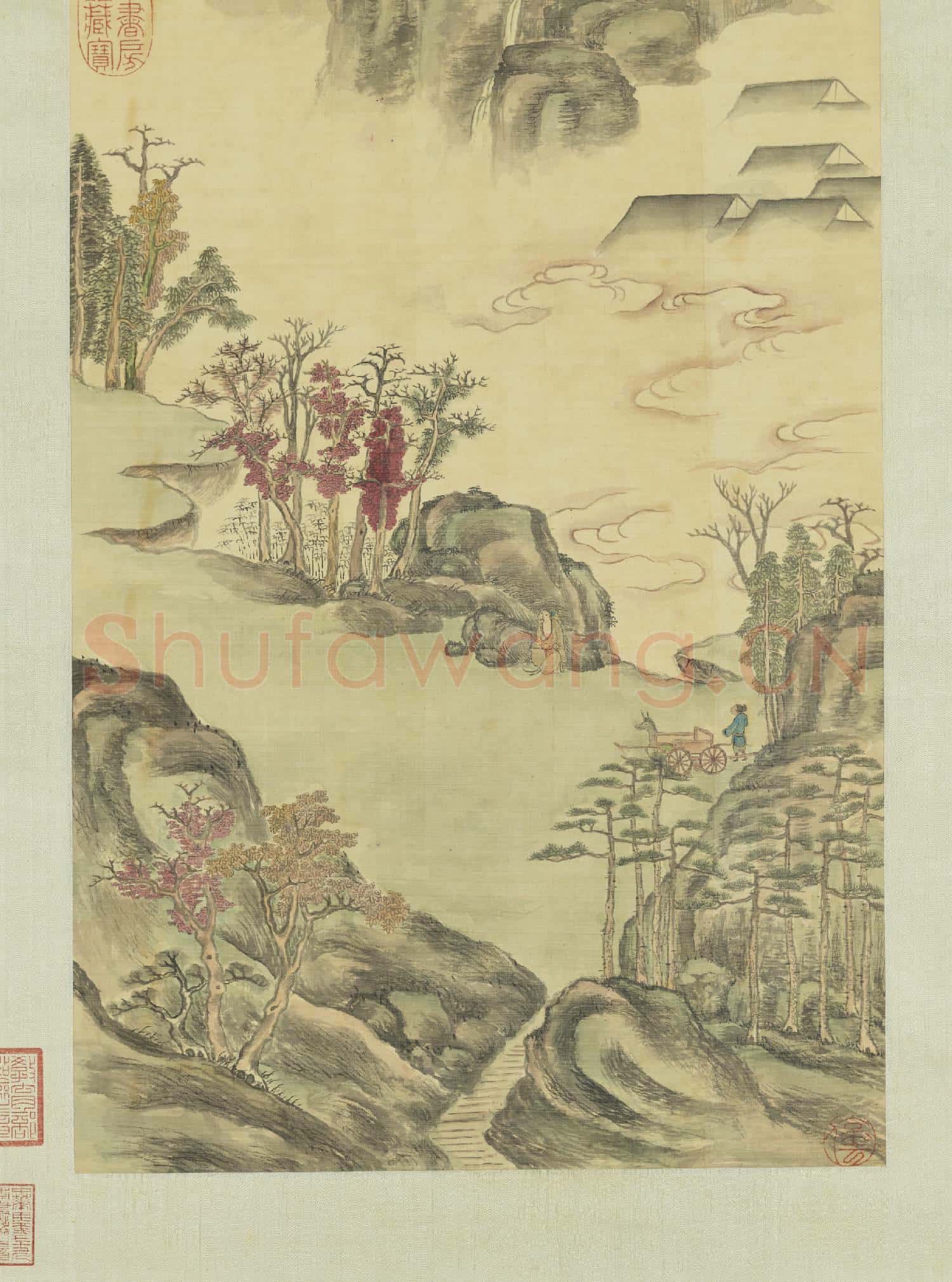
清超揆杜牧詩意圖 軸
清超揆杜牧诗意图 轴
詳細資料
藏品類型:繪畫
文物統一編號
故畫000788N000000000
作品號:故畫00078800000
品名:清超揆杜牧詩意圖 軸
分類:繪畫
作者:超揆
數量:一軸
典藏尺寸
本幅:62.8x31.9
質地
本幅:絹
| 題跋資料 | |||||
| 題跋類別 | 作者 | 位置 | 款識 | 書體 | 全文 |
作者款識
超揆
本幅:(書杜牧絕句一首)遠上寒山石徑斜。白雲深處有人家。停車坐愛楓林晚。霜葉紅於二月花。臣僧超揆謹寫。
行楷書
印記:臣揆
| 印記資料 | |
| 印記類別 | 印記 |
收傳印記:停雲
鑑藏寶璽:乾隆御覽之寶
鑑藏寶璽:宣統御覽之寶
鑑藏寶璽:嘉慶御覽之寶
鑑藏寶璽:御書房鑑藏寶
鑑藏寶璽:石渠寶笈
主題
主要主題
山水
秋景
其他主題
樹木
楓樹.槭樹
楓樹
其他主題
建築
房舍
其他主題
走獸
騾.驢
一匹
其他主題
車
獸力車
一輛
其他主題
樹木
松
其他主題
山水
瀑布
其他主題
山水
雲
其他主題
樹木
其他主題
人物
侍從(侍女、童僕)
其他主題
人物
高士(士人、隱士)
其他主題
山水
石磴、棧道
石磴
技法
皴法
披麻皴
人物衣紋描法(減筆)
苔點
皴法
參考資料
收藏著錄:石渠寶笈初編(御書房),下冊,頁1165
收藏著錄:故宮書畫錄(卷五),第三冊,頁568
收藏著錄:故宮書畫圖錄,第十二冊,頁227-228
內容簡介(中文)
超揆和尚(西元十七世紀),江蘇長洲人。俗姓文,名果,字輪菴。為文徵明後裔,震亨之子。嘗佐桑格總戎平定滇亂,得官不仕,棄而出家。聖祖南巡,迎駕有功,召入北京,賜塔玉泉山,卒謚文覺禪師。
工詩畫,所畫山水,構思造景皆能別開生面,且多寫平生遊歷之名山異境。本幅寫杜牧七絕詩意。
內容簡介(英文)
Inspired by a Poem of Tu Mu
Ch'ao-k'uei (17th century)
Ch'ing Dynasty
Ch'ao-k'uei, who came from Ch'ang-chou in Kiangsu province, was a monk who lived during the end of the Ming and beginning of the Ch'ing dynasty. In secular life his surname was Wen, his name Kuo, and his style name Lun-an. He was a descendant of the great Ming painting master Wen Cheng-ming. He helped Sang Ko in the suppression of disorders in Yunnan, but instead of serving in the office which he was granted, he became a monk. Ch'ao-k'uei attracted the attention of the K'ang-his Emperor (r. 1662-1772) during one of his southern tours of inspection, and was summoned to Peking, where the emperor built a pagoda for him at Mt. Yu-ch'uan. He was granted the posthumous title "Ch'an Master Wen-chueh."
He was both a poet and painter, his landscapes revealing a style of composition which is immediately distinctive. Many of his works depict famous or unusual mountain scenery which he visited during his life. The present work was inspired by a poem by the T'ang dynasty poet Tu Mu.